When Is It Safe to Eat Lettuce Again
 On Dec. 29, 2021, The CDC Appear That 13 People Infected With The Outbreak Strain Of E. Coli O157:H7 Take Been Reported From Six States. Illnesses Started On Dates Ranging From November. 27, 2021, To December. 9, 2021. Sick People Range In Age From 4 To 79 Years, With A Median Age Of 54, And 92 Percent Are Female. Of 12 People With Data Bachelor, 4 Have Been Hospitalized And I Person Adult A Type Of Kidney Failure Called Hemolytic Uremic Syndrome (Hus). No Deaths Have Been Reported.
The Centers for Disease Control and Prevention is advising not to swallow Simple Truth Organic Ability Greens and Nature'due south Basket Organic Ability Greens with "best if used past" dates through Dec. twenty, 2021. Investigators are working to determine if boosted products may exist contaminated. There has been no word about a remember from the FDA to date. Also, the location of where the lettuce was grown has not been announced, still, given the fourth dimension of the year the likely growing regions are either Yuma or Mexico, or both.
Here is a bit of history of why we go on seeing E. coli outbreaks in Yuma and other places – nosotros (FDA and the Leafy Greenish Growers) are failing to deal with environmental contamination.
In 2018, a full, 240 people infected with the outbreak strains ofE. coli O157:H7 were reported from 37 states. Illnesses started on dates ranging from March thirteen, 2018, to August 22, 2018. Sick people ranged in historic period from 1 to 93 years, with a median age of 26. 60-six percent of ill people were female. Of the more than 201 people with data bachelor, 104 were hospitalized, including 28 people who adult hemolytic uremic syndrome, a blazon of kidney failure. Five deaths were reported from Arkansas, California, Minnesota (2), and New York.[1]
In add-on to this outbreak being unusually large, case-patient clinical course was unusually severe. The proportion of case-patients developing HUS (12.7%) was twice as high equally previous outbreaks of Shiga toxin-producing East. coli O157 (half dozen.3%). In that location were five deaths in this outbreak (2.2%), which is almost four times college than expected (0.half-dozen%). This could be explained by the strain'south Stx2a toxin subtype, which produces more than virulent toxins than other types. Outbreaks with Stx2 toxin are more likely to upshot in increased rates of HUS.
WGS analysis of isolates from 184 sick people identified antibody resistance to chloramphenicol, streptomycin, sulfisoxazole, tetracycline, and trimethoprim-sulfamethoxazole. Standard antibiotic resistance testing of eight clinical isolates past CDC's National Antimicrobial Resistance Monitoring Arrangement (NARMS) laboratory confirmed these findings. Isolates from iv of those sick people also contained genes for resistance to ampicillin and ceftriaxone. These findings do not affect handling guidance since antibiotics are non recommended for patients withDue east. coli O157 infections. Epidemiologic, laboratory, and traceback evidence indicated that romaine lettuce from the Yuma growing region was the likely source of this outbreak.
The FDA and state and local regulatory officials traced the romaine lettuce to 23 farms and 36 fields in the Yuma growing region. The FDA, along with CDC and state partners, started an environmental cess in the Yuma growing region and nerveless samples of water, soil, and manure. CDC laboratory testing identified the outbreak strain ofE. coli O157:H7 in water samples taken from a canal in the Yuma growing region. WGS showed that theEast. coliO157:H7 institute in the canal h2o is closely related genetically to theEast. coli O157:H7 from ill people. Laboratory testing for other environmental samples is continuing. FDA is standing to investigate to larn more about how theEastward. coli bacteria could take entered the water and ways this water could accept contaminated romaine lettuce in the region.


Certainly, as well-cited in a higher place, leafy greens have been a source of Eastward. coli-related illnesses for decades, and there have been concerns raised almost lettuce grown in the Yuma region. The CDC reports every bit of May 20, 2010, a total of 26 confirmed and seven probable cases related to an E. coli O145 outbreak have been reported from 5 states since March i, 2010, linked to shredded romaine grown in Yuma.[two] In the FDA'south "Environmental Assessment Study in December 2010," the authors determined:
that the R.5. park is a reasonably likely potential source of the outbreak pathogen based upon the testify of direct drainage into the lateral irrigation culvert; the moist soil in this drainage expanse; the multiple sewage leach systems on the property; the presence of other STEC constitute in the lateral irrigation canal and in the growing fields of the suspect farm; and the fact that the department of the lateral canal downstream from the R.V. park supplies h2o to only one other farm in add-on to the suspect farm.
Ii pumps are located on the principal Wellton canal near the lateral canal split that supplies water to fields of the suspect farm; 1 gasoline powered pump on a trailer and one permanent electric pump with an attached hose. The electric pump supplies canal water to an fastened open-end hose. The site is non secured from vehicles and the hose pump is also unsecured. At the time of this investigation there were people living in recreational vehicles on undeveloped land inside one mile of the hose pump. The fact that this area is open to vehicles and the pump and hose are unsecured get in possible for an R.V. owner to dump and rinse out their R.V. septic arrangement into the main Wellton culvert at the lateral canal split that supplies the farm. The ground near the hose pump shows erosion evidence of drainage into the Wellton canal. Soil collected from this erosion site tested positive for other Stx2-producing STEC simply did not match the outbreak strain.
In a 2009 "Survey of Selected Leaner in Irrigation Canal Water – Tertiary Twelvemonth" written by Jorge Chiliad. Fonseca, he correctly predicted the human and industry problems that were likely to plague the Yuma lettuce growers:
Despite the fact that no Arizona lettuce grower has been involved in any contaminated-lettuce outbreak, it is of paramount importance to decide the reasons why Arizona lettuce is regarded as safe. This can help lower possibilities of whatever emerging problem and forestall a catastrophic damage to the industry, as it has occurred in other regions when no control was taken to reduce risks of contaminated product.
A PowerPoint done by Dr. Fonseca again illustrated the varying risks of lettuce product in Yuma. An example of a few of his points of concern:

And, then the 2018 romaine lettuce E. coli outbreak struck, sickening hundreds in the United States and Canada with dozens suffering from acute kidney failure with five reported deaths. Once again, the Wellton Irrigation Canal was the focus of attention in the "Memorandum to File on the 2018 Environmental Assessment":
During this EA, 3 samples of irrigation canal water nerveless by the team were found to comprise E. coli O157:H7 with the aforementioned rare molecular fingerprint (using whole genome sequencing (WGS)) as the strain that produced human illnesses (the outbreak strain). These samples were nerveless from an estimate 3.5-mile stretch of an irrigation culvert in the Wellton expanse of Yuma County that delivers water to several of the farms identified in the traceback investigation as shipping romaine lettuce that was potentially contaminated with the outbreak strain. The outbreak strain was not identified in any of the other samples nerveless during this EA, although other pathogens of public health significance were detected.
Not surprisingly, the FDA in its total "Environmental Assessment of Factors Potentially Contributing to the Contamination of Romaine Lettuce Implicated in a Multi-Land Outbreak of E. coli O157:H7,"[three]concluded that the chance of environmental contamination was in fact a well-known and long-standing chance:
Nutrient safety problems related to raw whole and fresh-cut (due east.g., bagged salad) leafy greens are a longstanding consequence. As far back every bit 2004, FDA issued letters to the leafy greens industry to express concerns about continuing outbreaks associated with these commodities. FDA and our partners at CDC identified 28 foodborne illness outbreaks of Shiga-toxin producing E. coli (STEC) with a confirmed or suspected link to leafy greens in the United States betwixt 2009 and 2017. This is a time frame that followed industry implementation of measures to address safety concerns after a big 2006 outbreak of E. coli O157:H7 caused by bagged spinach. STEC contamination of leafy greens has been identified by traceback to about likely occur in the farm environs.
Contamination occurring in the farm surroundings may be amplified during fresh-cutting produce manufacturing/processing if appropriate preventive controls are not in place. Dissimilar other foodborne pathogens, STEC, including E. coli O157:H7, is non considered to exist an ecology contaminant in fresh-cut produce manufacturing/processing plants.
Well-established reservoirs for Eastward. coli O157:H7 are the abdominal tract of ruminant animals (east.g., cattle, goats, and deer) that are colonized with STEC and shed the organism in manure. Ruminant animals colonized with STEC typically accept no symptoms. In contrast, human infection with E. coli O157:H7 usually produces symptomatic disease often marked by astringent, often bloody, diarrhea; astringent adverse health outcomes or even death can result. Humans shed Due east. coli O157:H7 in the stool while sick and sometimes for brusque periods later symptoms accept gone away, merely humans are not chronic carriers. Various fresh water sources, including municipal well, and recreational water, have been the source of E. coli O157:H7 infections in humans, as has contact with colonized animals at farms or petting zoos. Even so, most East. coliO157:H7 infections in humans occur from consuming contaminated food.
In its summary of its ecology findings (also summarized in a November one, 2018 communication to public officials), the "FDA [in part] identified the following factors and findings every bit those that well-nigh likely contributed to the contamination of romaine lettuce from the Yuma growing region with E. coli O157:H7 that caused this outbreak":
- FDA has concluded that the water from the irrigation canal where the outbreak strain was found well-nigh likely led to contamination of the romaine lettuce consumed during this outbreak.
- There are several ways that irrigation canal water may have come in contact with the implicated romaine lettuce including straight application to the crop and/or apply of irrigation canal water to dilute ingather protection chemicals applied to the lettuce ingather, either through aerial or ground-based spray applications.
- How and when the irrigation canal became contaminated with the outbreak strain is unknown. A big animal feeding operation is nearby but no obvious route for contagion from this facility to the irrigation canal was identified. Other explanations are possible although the EA team constitute no evidence to support them.
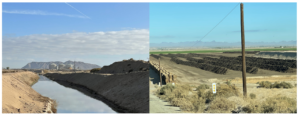
And a few more photos for expert mensurate:


________________________
[1] Lyndsay Bottichio,et al., Shiga Toxin-ProducingEastward. coliInfections Associated with Romaine Lettuce – United States, 2018,Clinical Infectious Diseases (December 9, 2019), https://academic.oup.com/cid/advance-article/doi/10.1093/cid/ciz1182/5669965.
[2] https://www.cdc.gov/ecoli/2010/shredded-romaine-five-21-10.html
[three] https://www.fda.gov/Nutrient/RecallsOutbreaksEmergencies/Outbreaks/ucm624546.htm
(To sign up for a free subscription to Nutrient Condom News, click hither .)
Source: https://www.foodsafetynews.com/2022/01/publishers-platform-another-e-coli-outbreak-in-leafy-greens-given-the-time-of-the-year-likely-linked-again-to-yuma/
0 Response to "When Is It Safe to Eat Lettuce Again"
Post a Comment